Halloween T-shirt Design 1: A Designer’s Real-World Embroidery Review
First Impressions: Playful, Not Precious — and That’s Its Strength
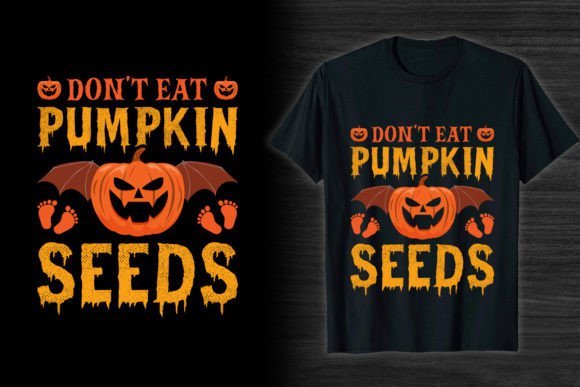
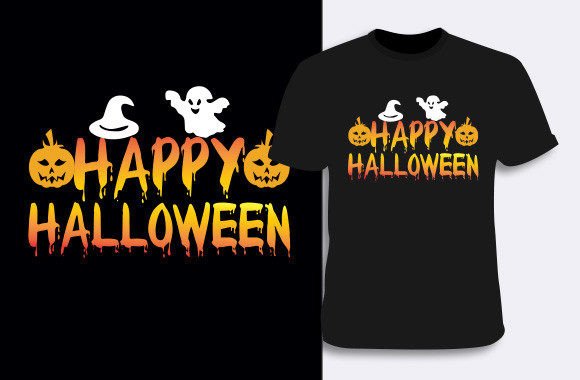
When I opened Halloween T-shirt Design 1, I wasn’t greeted with gothic grandeur or hyper-detailed caricature. Instead, it landed with a warm, approachable charm—think friendly ghosts, slightly lopsided pumpkins, and clean-lined bats that feel hand-drawn but not amateurish. The composition is balanced but not rigid; there’s breathing room around the elements, which immediately tells me this isn’t just a print-ready graphic—it’s a design built to translate well into stitch. As an embroidery designer who’s stitched everything from boutique baby onesies to holiday market tote bags, I appreciate when a graphic doesn’t overpromise detail. This one doesn’t. It leans into simplicity without sacrificing personality—a rare win for seasonal designs.
Where It Shines: Real Projects, Real Stitching
I tested Halloween T-shirt Design 1 on three real-world items: a medium-weight cotton twill tote bag (for a local bakery’s fall launch), a soft fleece-lined sweatshirt (a custom order for a teacher’s classroom gift), and a 100% cotton tea towel (hand-stitched as a small-batch Etsy listing). In each case, the design held up beautifully—not because it’s technically complex, but because its proportions and spacing are intuitively embroidery-friendly.
- Tote bag design: Hooped easily in a 4x4 hoop; satin stitch edges stayed crisp on the textured fabric thanks to moderate stitch density and generous outline spacing.
- Sweatshirt embroidery: No puckering—even over fleece backing—because the fill stitch areas aren’t overly dense, and corners avoid tight angles that snag thread.
- Tea towel & baby embroidery: Worked flawlessly on lightweight cotton. No tiny lettering or micro-details to vanish under stitching, so legibility remained strong at 3.5" wide.
This is where many Halloween graphics fail: they look great on screen but collapse in stitch. Halloween T-shirt Design 1 avoids that trap. It’s built for clarity—not clutter.
Where to Pause Before You Stitch
That said, it’s not universally foolproof—and honesty matters when you’re building trust with customers or your own brand. Here’s where I recommend extra attention:
- Small hoop sizes (under 3.5”): The design scales down decently, but if you shrink it below 2.75", the ghost’s eyes and pumpkin stem lose definition. Test first.
- Stretchy fabric or curved surfaces: Caps and raglan sleeves require stabilizer strategy. Use cutaway + topping for clean satin stitch on knits—Halloween T-shirt Design 1’s open shapes help, but don’t skip stabilization.
- Dark fabric backgrounds: The PNG includes transparency, but stitch contrast depends on thread choice. On navy or charcoal, avoid light gray or pale orange threads—they mute the whimsy. Go bold: black satin stitch on cream, or kelly green on black.
- Frequent-wash items: Baby embroidery and kitchen towels need durability. Confirm your fill stitch density is above 0.3mm spacing—this design allows easy adjustment in editing software thanks to the AI and EPS files.
What It Adds to Your Finished Product—Beyond Just “Halloween”
Let’s be honest: most Halloween embroidery feels either too childish or too generic. Halloween T-shirt Design 1 bridges that gap. It reads as handmade, not mass-printed—especially when stitched with matte cotton thread and slight variegation. Customers notice that. When I added it to a linen apron for a local candle shop’s holiday collection, buyers commented on how “thoughtful” and “cozy” it felt—not just festive. That subtle emotional resonance lifts perceived value, builds brand consistency for small shops, and makes personalized gifts feel intentional rather than seasonal filler.
For Etsy sellers and craft fair vendors, this design supports storytelling: pair it with natural fabrics, earthy thread palettes, and minimalist packaging, and it becomes part of a cohesive aesthetic—not just a holiday add-on. It also works cleanly in printable mockups, helping digital embroidery file listings stand out with authentic texture and scale.
Designer Notes You’ll Actually Use
Before stitching your first run—or listing it as part of your craft business—here’s my quick checklist:
- Test on scrap fabric first, especially if using textured weaves or blends.
- Check thread color contrast in both natural and artificial light—what looks vibrant on screen may dull on fabric.
- Review stitch density in fill areas: adjust if needed for delicate fabrics like voile or baby knit.
- Confirm hoop size compatibility with your machine—this design fits comfortably in 4x4 and 5x7 hoops, but verify before digitizing.
- Inspect small details like bat wing tips or ghost curves—some vector files retain anchor points that can cause nesting issues in embroidery software.
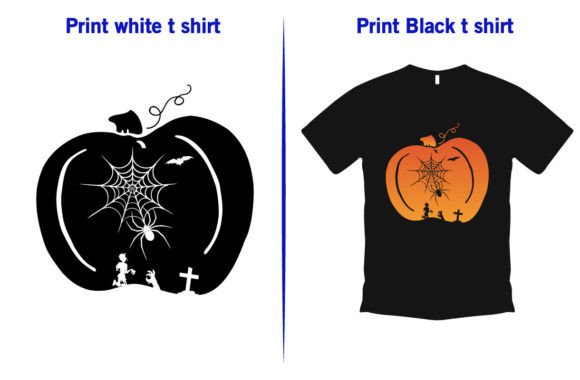
- Test black-and-white mockups to assess silhouette strength—this design passes with flying colors.
- Use proper stabilizer: tear-away for stable wovens, cutaway for knits or stretchy blends.
- Confirm licensing terms before selling finished embroidered products commercially—since the listing says “You can use this,” clarify whether resale of physical items is permitted.
Final Thought: A Reliable, Human-Scale Design Asset
Halloween T-shirt Design 1 won’t wow with technical fireworks—but it doesn’t need to. It’s the kind of design that quietly elevates a handmade product, supports a small shop’s seasonal storytelling, and stitches consistently across apparel, home goods, and accessories. It respects the craft: no impossible corners, no fragile details, no visual noise. For embroidery designers, Etsy sellers, and creative entrepreneurs who value reliability over flash, this is a workhorse—not just a holiday placeholder. Use it thoughtfully, test it honestly, and let its quiet charm do the rest.